
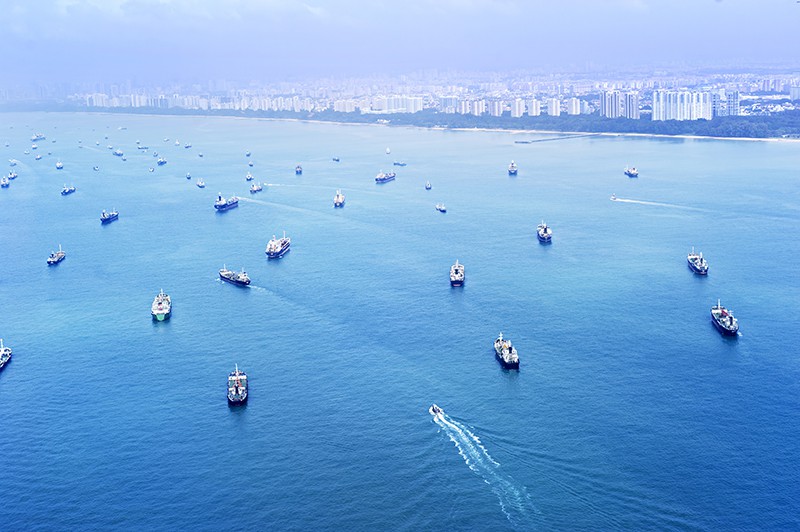
The global USV market is projected to grow at a CAGR of 10.6% between 2022 and 2030 [1] , with the US being the biggest USV market, worth US$196.6 million in 2022. However, several countries are expected to have a significant CAGR in that same period, namely Japan (9.6%) and Canada (8.7%).
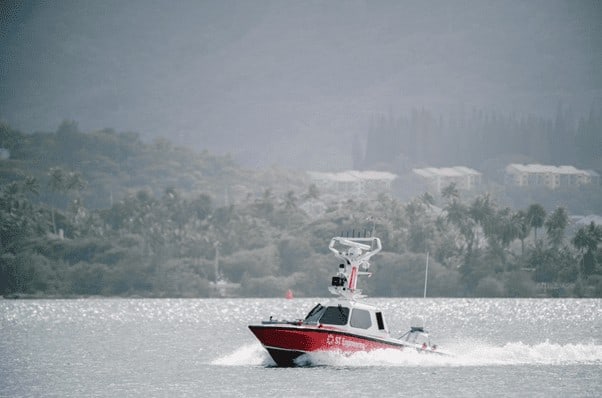
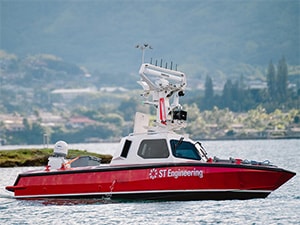
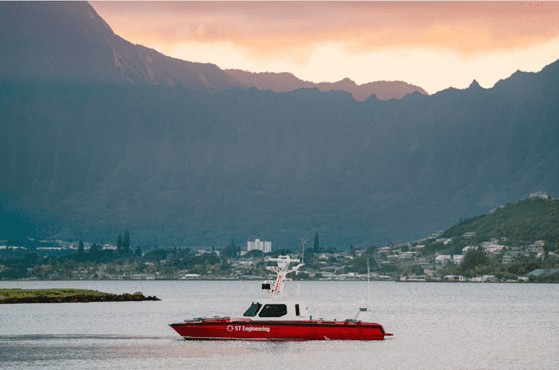
ST Engineering’s Unmanned & Integrated Systems has designed automation platforms to make manpower-reliant and dangerous maritime activities a thing of the past. Its wide range of autonomous vessels includes the Smart Maritime Autonomous Vessel (SMAV) that is converted from a crewed tugboat, the MERCURY Autonomous Underwater Vehicle (AUV) and the JUPITER Autonomous Solar-Powered vessel (ASPV).
Such autonomous solutions are helpful not just for law enforcement agencies and the Coast Guard; they can also detect and deter piracy, reduce risk in marine firefighting operations, and even be deployed for labour-intensive offshore survey work.
For some navies and marine authorities, building unmanned systems from scratch may not be appropriate as the initial cost of setting up production facilities or obtaining technologies from a market that is still developing may be prohibitively expensive. The AUTONOMAST™ thus provides the flexibility to move to unmanned at their own pace, without having to commit time and resources to acquire unmanned vessels.
Powering smart navigation
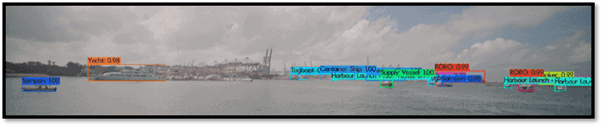
Depending on the application, the perception suite or AUTONOMAST™ obstacle detection software is integrated into the USV and can detect obstacles as small as barrels and sailing yachts, which standard navigation radars may miss. ST Engineering’s AI engine which has been trained using over 50,000 images makes this possible.
This software employs metadata augmentation to highlight nearby obstacles and ships with colored boxes in the video output, alerting the operator while guiding the vessel around these obstacles. This capability proves invaluable across various missions, such as helping firefighting teams avoid debris from larger ships or oil rigs.
In rough weather, the AUTONOMAST™ algorithm stabilises the ship by optimising route planning to minimise the effects of rocking caused by waves and wind. AUTONOMAST™ SUV demonstrations conducted in various countries have showcased the USVs’ ability to withstand rough sea states effectively.
A secure foundation
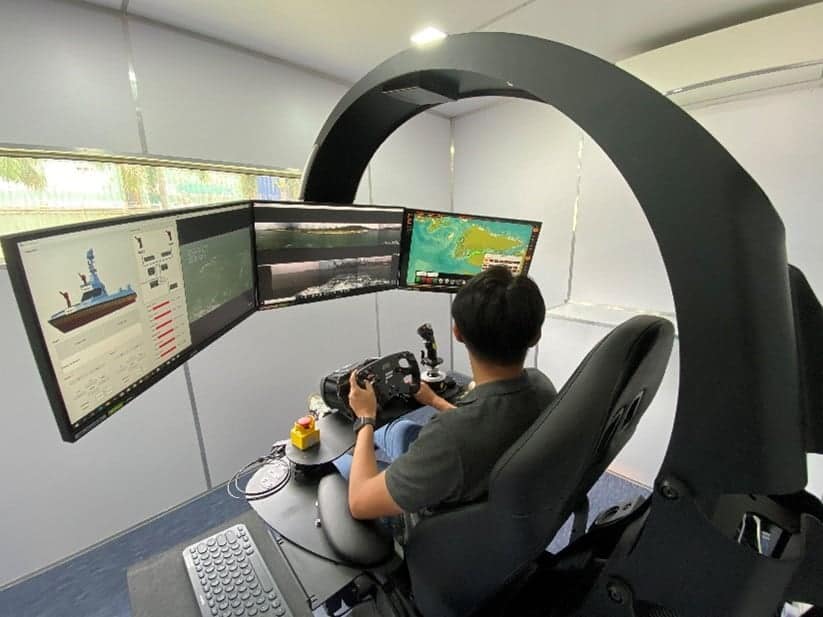
At the shore control centre, the systems are protected with BIOS-based malware resistance and anomaly detection. The communication gateways between the USV and the control centre are also safeguarded through a secure data link with a content checker. As sensitive data may be transmitted in security operations, this prevents external parties from hijacking any information.
Unmanned firefighting at sea
The scenario of a fire at sea poses an immense risk, as even a small fire can spread in seconds to damage life and property.
Not too long ago, numerous firefighting officers had to be dispatched to the scene in a mission that could endanger their lives, from blaze assessment to extinguishing flames. Today, USVs with enhanced firefighting capabilities manage fires more safely and can reduce human effort by an estimated 50%.
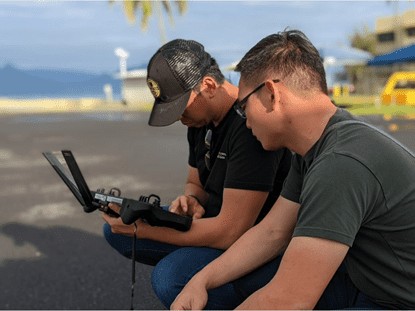
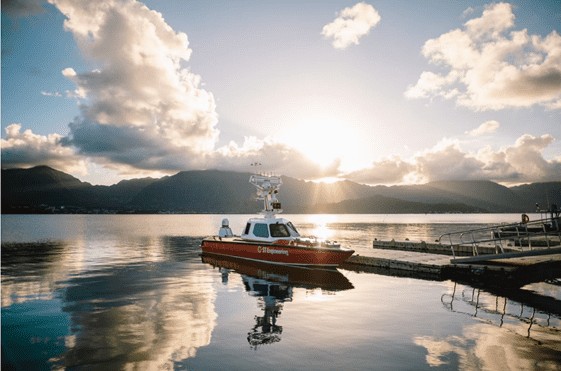
In Singapore, the Singapore Civil Defence Force (SCDF) has harnessed the capabilities of ST Engineering’s VENUS Unmanned Surface Vehicle, which uses AUTONOMAST™ to augment firefighting efforts. AUTONOMAST™ relieves human operators of vessel manoeuvring tasks, enabling SCDF personnel to focus on critical firefighting endeavors, enhancing operational effectiveness, and reducing safety incidents.
The USV's ability to perform vessel manoeuvre functions like station keeping reduces the cognitive load on human operators so crew members can focus on firefighting—this cuts down human effort by half or more. Not only are firefighting capabilities enhanced, but there is also less risk to lives.
The remotely controlled USV is like a first responder deployed into the danger zone, sending critical intelligence to the control station at shore to determine the best course of action.
The use of infrared cameras that provide a 360-degree view, pinpoint the hot spot, provide visibility in low-light conditions and facilitate the direction of the water monitors for more effective firefighting. Augmented reality overlays help support decision-making.
At the same time, a robust perception suite with radar and optical trackers, multi-sensor fusion and navigation charts detect obstacles as small as barrels and sailing yachts that standard navigation radars can overlook. This allows firefighters to avoid debris, improving safety and efficiency.
The AUTONOMAST™ autopilot system considers the weight and thrust of water monitors—canons that eject large amounts of water (or foam) to put out a blaze—so the vessel maintains its position amidst dynamic conditions.
The USV works with other crewed vessels to achieve a better result, with less personnel. This means fewer officers are put at risk in a mission.
A force multiplier
[1] Source: Research and Markets report on the Global USV market published in February 20241